
Your Arizona landscape can look perfectly fine when everything is dry.
Then monsoon season puts it to the test.
Water collects beside the patio. Gravel shifts across the yard. A section of artificial turf stays wet longer than expected. Pavers begin showing movement. Plants struggle in areas that seemed fine earlier in the summer.
These aren’t always random problems.
Sometimes, they’re clues.
Late summer gives Arizona homeowners a unique opportunity to see how their landscape actually performs under extreme heat, heavy rain, wind, runoff, and changing moisture conditions.
So instead of asking, “How did my yard survive the Arizona summer?”
Ask a better question:
“What did this summer reveal about my yard?”
Here are some of the signs worth paying attention to—and what they may tell you about your landscape.
1. Standing Water May Point to a Bigger Drainage Problem
One puddle after a heavy storm isn’t necessarily a problem. But water that repeatedly collects in the same location deserves attention.
Proper landscape drainage in Arizona depends on more than installing a drain.
The grading of the property, soil conditions, elevations around patios and walkways, hardscape placement, and the direction water takes through the yard all influence how effectively stormwater moves away.
Take a walk around your property after rainfall and look for:
- Water collecting near the home, patio, or foundation
- Persistent low spots
- Runoff crossing walkways or patios
- Gravel or decorative rock being washed out of place
- Erosion channels through landscape areas
- Areas around artificial turf that remain unusually wet
A well-designed Arizona landscape should consider where water comes from, where it travels, and where it ultimately needs to go.
Sometimes, one of the most important features of a great landscape is something you barely notice:
Water goes where it’s supposed to go.
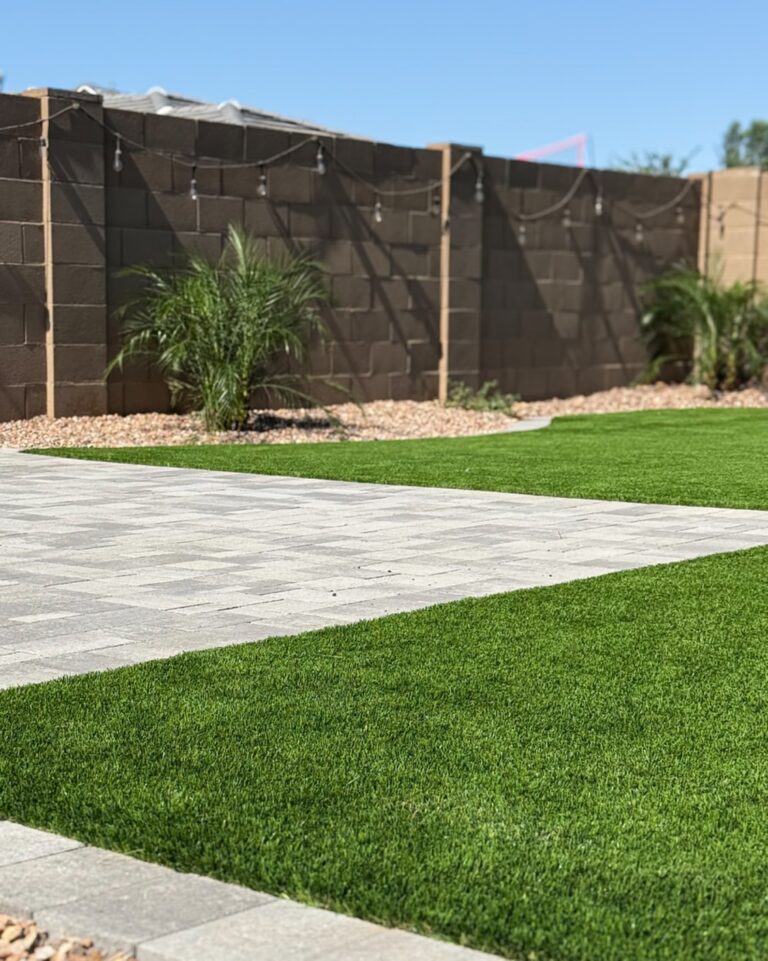
2. Your Pavers Are Being Tested Too
A newly installed paver patio, driveway, or walkway can look impressive on day one.
But appearance is only part of a successful paver installation in Arizona.
Arizona heat, foot and vehicle traffic, irrigation, and storm runoff can gradually reveal weaknesses in what’s underneath the finished surface.
If you’re noticing uneven sections, movement, separation, sinking, or recurring water accumulation around your pavers, it may be time to have the area evaluated.
Professional paver installation isn’t only about selecting a pattern and color.
Base preparation, proper grading, compaction, edge restraint, and drainage planning all contribute to long-term performance.
That’s why the quality of the work underneath your pavers can be just as important as the pavers themselves.
3. Artificial Turf Still Needs Proper Drainage
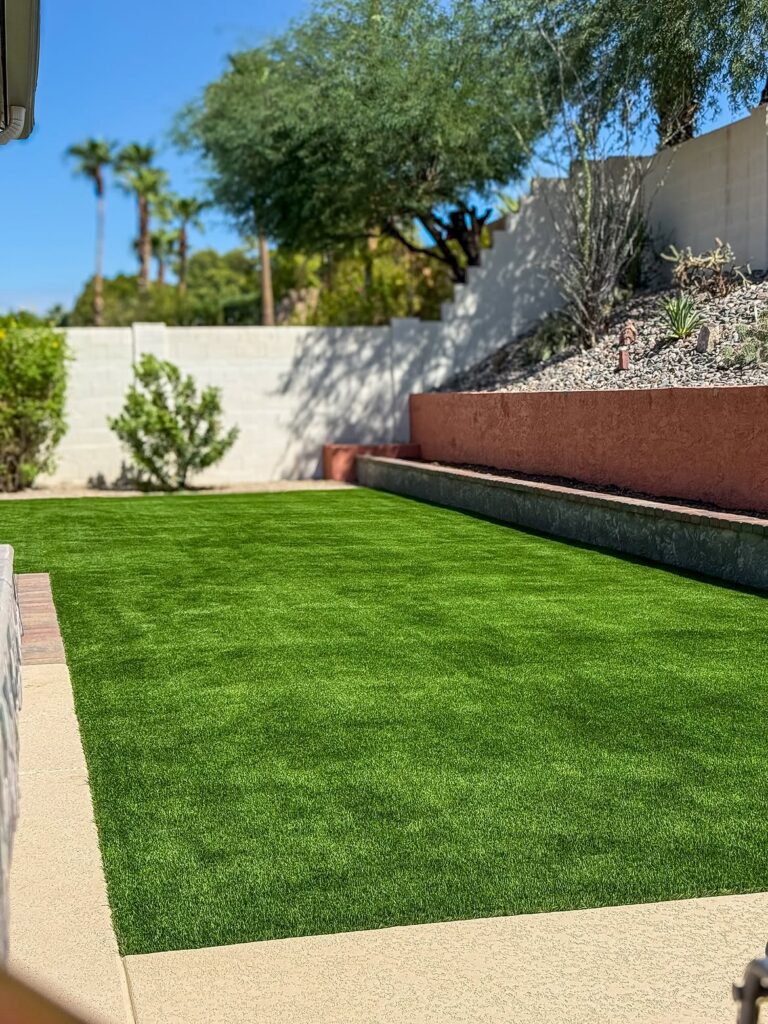
Artificial turf is a popular choice for Arizona landscaping because it provides a consistently finished lawn without the watering and mowing requirements of natural grass.
But there’s an important distinction:
Artificial turf doesn’t automatically fix an existing drainage problem.
Water still needs to move through and away from the installation.
The preparation beneath the turf—including the base, compaction, grading, and surrounding elevations—plays an important role in how the area performs when rainfall arrives.
If water repeatedly collects around your turf or neighboring hardscapes, the issue may extend beyond the turf itself.
A professional artificial turf installation in Arizona should therefore consider the entire landscape, not just the material visible on top.
4. Monsoon Season Is a Good Time to Check Your Irrigation System
It may sound strange to think about irrigation when rain is falling, but late summer is an excellent time to evaluate your system.
Arizona rainfall can vary significantly from one location to another, so your irrigation schedule shouldn’t simply remain unchanged regardless of conditions.
Look for:
- Damaged or exposed drip lines
- Broken emitters
- Irrigation leaks
- Plants receiving too much or too little water
- Water spraying onto pavers or other hardscapes
- Oversaturated landscape areas
- Dry zones that aren’t receiving adequate coverage
- Irrigation schedules that no longer match current conditions
An efficient Arizona irrigation system isn’t simply about watering less.
It’s about delivering the right amount of water to the right places based on your plants, soil, weather, and landscape design.
And when the weather changes, your irrigation strategy may need to change with it.
5. Watch Where Your Gravel Goes
Want an easy way to understand how stormwater travels through your property?
Look at what moved.
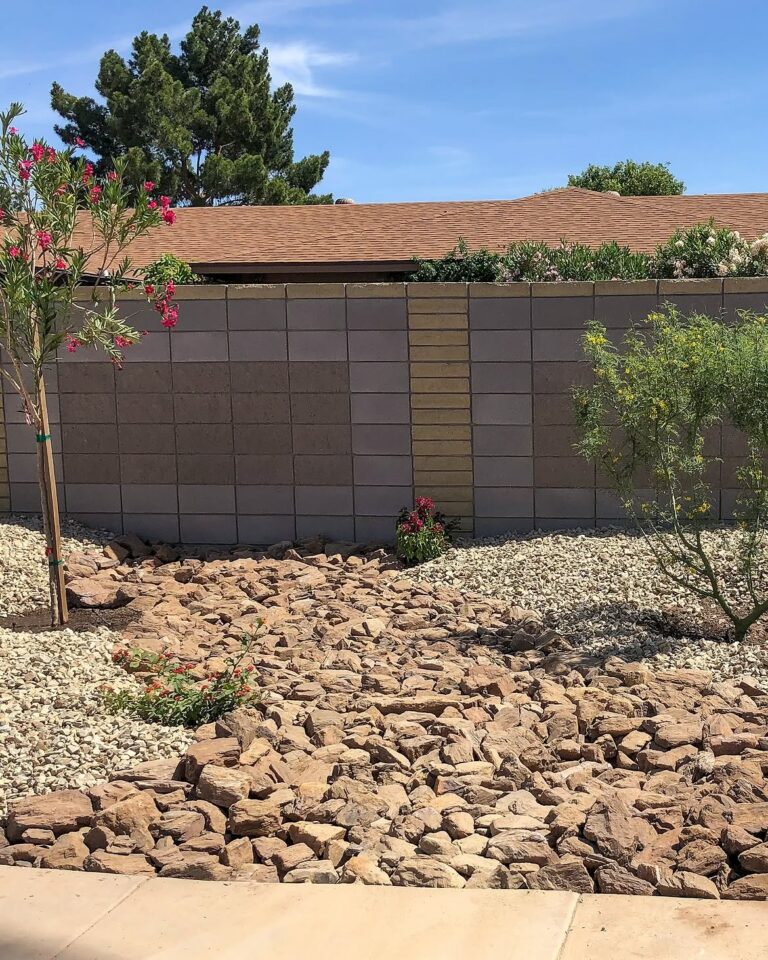
If gravel repeatedly washes onto your driveway, sidewalk, pavers, artificial turf, or another part of the landscape after heavy rain, that movement may reveal the natural path of runoff through your property.
Moving the gravel back fixes the appearance.
Understanding why it keeps moving helps you address the underlying issue.
Depending on the property, solutions may involve improved grading, edging, drainage features, strategic rock placement, or changes to surrounding landscape areas.
This is one reason professional landscape design in Arizona should consider the entire property as a connected system rather than treating every feature separately.
6. Summer Heat Can Expose Weaknesses in Your Landscape
Rain isn’t the only test.
Arizona’s extreme summer heat can also reveal which parts of your landscape are working—and which aren’t.
You may notice certain plants struggling with heat exposure, areas that could benefit from more shade, irrigation zones that require attention, or outdoor spaces that simply aren’t comfortable enough to use during warmer months.
That’s valuable information.
Because good landscape design isn’t about forcing the same solution onto every property.
It’s about understanding the site’s conditions and designing around them.
Plant selection, shade, irrigation, hardscaping, drainage, and usable outdoor space should work together.
7. Your Backyard May Be Telling You It Needs More Than a Repair
Sometimes summer doesn’t expose a construction problem.
It exposes an opportunity.
Maybe your landscaping performed perfectly but you barely used the backyard.
Ask yourself:
Where did you actually spend time outside this summer?
Maybe your patio isn’t large enough when friends and family visit.
Maybe there’s nowhere comfortable to sit in the shade.
Maybe the transition between your patio, turf, and landscape areas doesn’t flow the way you’d like.
Or maybe you’ve realized the backyard could become much more than it is today.
A thoughtfully planned backyard landscape design might include:
- Paver patios and walkways
- Artificial turf
- Pergolas and shade structures
- Landscape lighting
- Fire pits and gathering areas
- Putting greens
- Gravel and decorative rock
- Planting and irrigation
- Defined entertainment spaces
The goal isn’t simply to add more features.
It’s to create an outdoor environment where every feature has a reason to be there.
Before Fall Arrives, Walk Your Property
You don’t need to be a landscape contractor to perform a useful assessment of your yard.
After the next significant rain or simply before Arizona’s monsoon season ends, walk through your property and pay attention.
Where does water collect?
Where does runoff travel?
What moved?
Which plants struggled with the summer heat?
Which areas performed exactly as expected?
Which parts of the yard did you actually use?
And perhaps the most revealing question:
If you were designing your backyard today, what would you change?
Your answers can tell you a lot about what your landscape needs next.
Planning an Arizona Landscape Upgrade?
At KO’s Landscaping, we believe a successful landscape should do more than look great when the project is finished.
It should be thoughtfully planned around the property and the people who use it.
Our team works with Arizona homeowners on landscape design and installation, pavers, artificial turf, irrigation systems, gravel and rock, landscape lighting, pergolas, putting greens, fire pits, and complete backyard transformations.
Whether monsoon season exposed an issue you’ve been putting off or this summer made you realize your outdoor space could work harder for your lifestyle, late summer is a great time to start thinking about what’s next.
Because sometimes the weather doesn’t create the problem.
It simply shows you where to look.
Ready to Transform Your Arizona Landscape?
Whether you’re considering a complete backyard renovation or upgrading specific areas of your property, KO’s Landscaping can help you create an outdoor space designed for Arizona living.
Contact KO’s Landscaping today to request a consultation and start planning your next landscape project.