
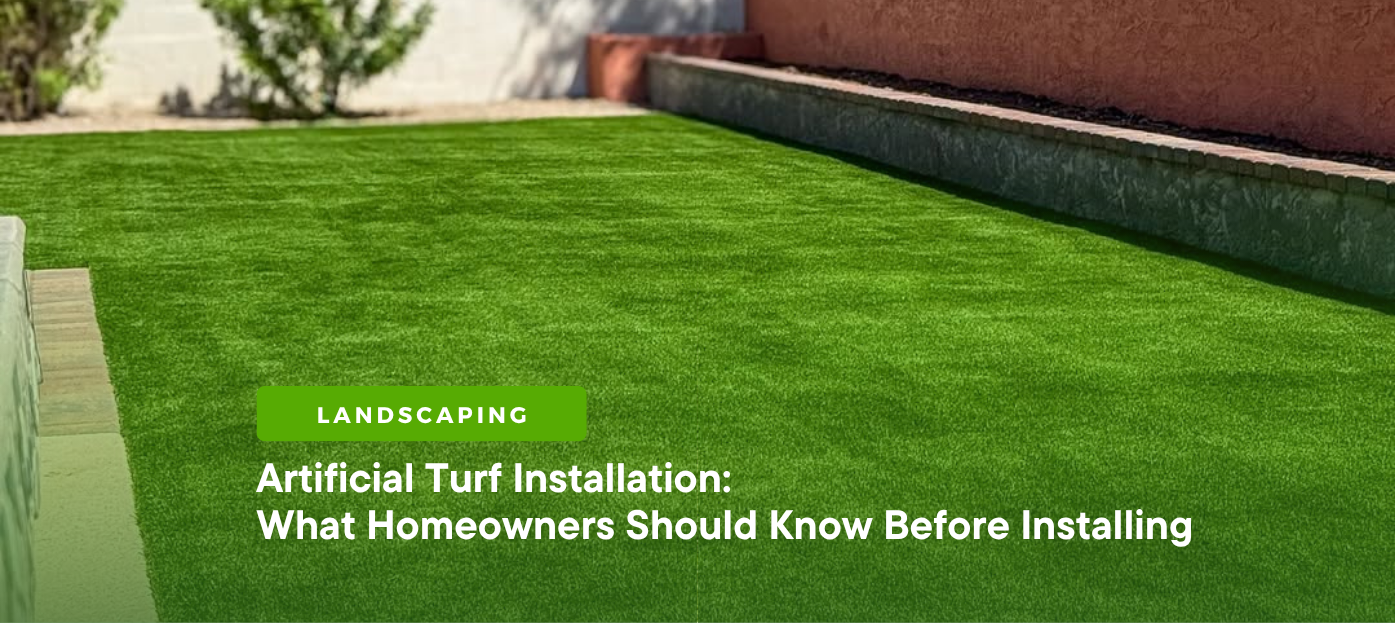
Artificial turf is one of the most searched landscaping upgrades today — but long-term results depend on planning, preparation, and proper installation. When done right, turf delivers a clean, durable, and highly functional outdoor space. When done wrong, it leads to drainage issues, uneven surfaces, and premature wear.
This comprehensive guide breaks down exactly what homeowners should understand before installing artificial turf and why professional execution matters.
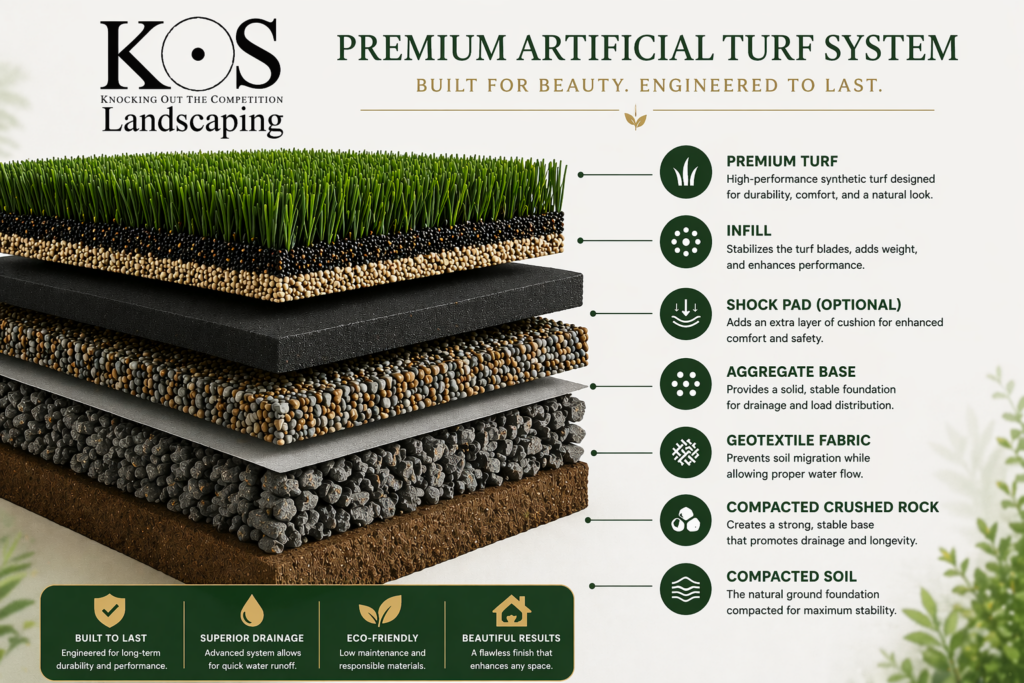
Turf Success Starts Below the Surface
The most common turf problems don’t come from the turf itself they come from poor ground preparation.
A proper turf installation includes:
- Removing existing grass and organic material
- Preparing and compacting the ground evenly
- Creating correct drainage so water doesn’t pool
- Securing edges to prevent lifting or shifting
Skipping these steps leads to uneven surfaces, wrinkles, and premature wear.
Drainage Matters More Than You Think
Artificial turf still needs water management.
Without proper drainage:
- Water collects under the turf
- Odors can develop over time
- The surface may feel unstable
Professional installations plan drainage before turf is installed, not after problems appear.
Turf Is Not One-Size-Fits-All
Different spaces require different turf types.
High-traffic areas, pet zones, and seating spaces all benefit from specific turf densities and blade heights. Choosing turf based on appearance alone often results in faster wear and reduced comfort.
Matching the turf to how the space will actually be used makes a noticeable difference long term.
Integrating Turf With the Rest of the Yard
The best turf projects don’t look like an afterthought.
Clean transitions between:
- Turf and gravel
- Turf and pavers
- Turf and planting areas
help the yard feel intentional and functional. Border planning also keeps materials separated and easier to maintain.
Maintenance Still Exists (Just Less of It)
Artificial turf is low-maintenance, not zero-maintenance.
Best practices include:
- Occasional brushing to maintain blade position
- Rinsing debris and dust
- Spot cleaning high-use areas
Simple upkeep keeps turf looking fresh year after year.
A Well-Planned Installation Pays Off
Artificial turf is an investment in convenience and consistency but only when installed with the full system in mind.
Homeowners who plan properly enjoy:
- Even surfaces
- Better drainage
- Longer turf lifespan
- A cleaner, more usable outdoor space
Common Mistakes to Avoid
Homeowners often run into issues due to:
- Inadequate base preparation
- Poor drainage planning
- Choosing turf based on looks only
- Weak edging or borders
- Rushing installation timelines
Avoiding these mistakes upfront saves time, money, and frustration.
Why Professional Installation Matters
Artificial turf is a system not just a surface.
Professional installation ensures:
- Proper ground preparation
- Stable, even surfaces
- Correct drainage design
- Clean edges and transitions
Long-term durability.
KO’s Landscaping installs artificial turf with performance, layout, and longevity in mind, focusing on results that hold up over time.
When turf is planned correctly and installed properly, it becomes one of the most reliable and functional features of any outdoor space.